The only guide built around the urgency moment. Find the closest locksmith, vet them in 60 seconds, and know exactly what to say for the fastest dispatch. National coverage.
Every one of these cuts dispatch time. Skipping them costs you 5-20 minutes when every minute matters.
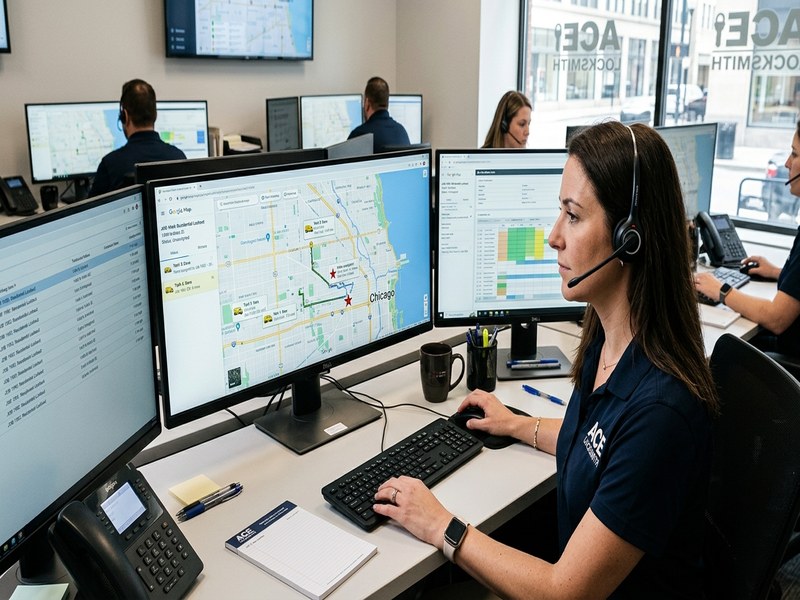
Texting adds 5-15 minutes of back-and-forth before dispatch is confirmed. A phone call gives the dispatcher your address, situation, and lock type in under 90 seconds and gets a tech rolling immediately.
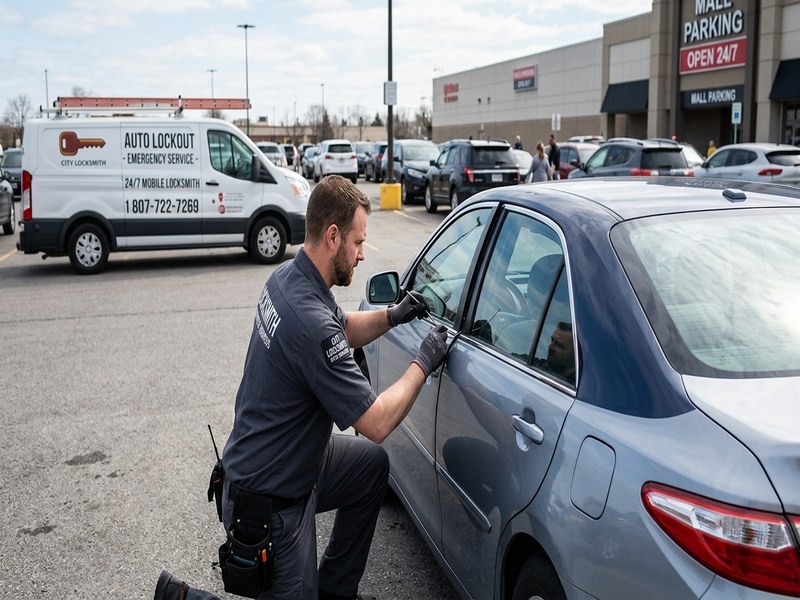
The single biggest dispatch delay is address confusion. Know your full street address including apartment or unit number. For car lockouts, say the parking structure level or lot name, not just "the mall parking lot."
For auto lockouts: year, make, model, and whether you have any key at all. For door lockouts: whether it is a deadbolt, knob lock, or smart lock. This lets the tech bring the right tools and skips the second trip to the van.
A legitimate locksmith will give you a time window immediately. If they say "soon" or refuse to estimate, that is a red flag. Get a real number: "Is that 20 minutes or 45 minutes?" Commit to the first company that gives a specific ETA.
Asking "What is your technician's name?" signals you are paying attention and helps verify the right person arrives. Scam operations often dispatch anonymous contractors who inflate prices at the door.
Ask for the service call fee plus the estimated range for your specific situation. Get it verbally confirmed before they drive. Legitimate companies give a range; "we will tell you when we see it" is a scam warning sign.
You can verify a locksmith is legitimate before they arrive, even when you are stressed and on the side of the road. These four checks take under a minute combined.
The fastest safe locksmith vet: ask for their state license number immediately. In California, check bsis.dca.ca.gov (10 seconds). In any state, a refusal to provide a license number is an immediate disqualifying red flag. Then confirm they have a Google Maps listing with more than 10 reviews. Total time: under 60 seconds.
Say: "Can you give me your state locksmith license number?" Any legitimate locksmith knows it immediately. In California, BSIS licensing is mandatory. Write it down. If they hesitate, say "I need it for my records" and see how they respond.
15 secondsWhile on the phone, search the company name on Google Maps in another tab. You need one thing: do they have a real listing with real reviews? Fewer than 10 reviews is a yellow flag. Zero photos on their listing is a yellow flag. A new listing with 20 five-star reviews all posted the same month is a scam flag.
20 secondsThe phone number you called should match the Google Maps listing. Scam operations use call centers that route to random contractors. If the Google listing shows a different number from the one you called, hang up and call the Maps-listed number directly.
10 secondsAsk: "What is the service call fee, and what is the typical price range for a [your situation] lockout?" A legitimate answer sounds like: "Service call is $65, and residential door lockouts typically run $85-140 total." Vague answers or "prices vary widely" without any range is a scam indicator. Do not agree to service without at least a range.
15 secondsApproximate weighting. Google does not publish exact factors. Proximity is ONE input, not the only one.
When you search "nearest locksmith" or "locksmith closest to me," Google does not simply sort by GPS distance. It runs a three-factor ranking algorithm that weighs proximity, keyword relevance, and business prominence together.
This means the first result is often NOT the geographically closest locksmith. A company with 200 reviews and an optimized profile can rank above a shop that is physically half the distance away.
What this means for you in a hurry:
This exact sequence cuts average call-to-dispatch time. Follow it in order. Do not give background story before giving your address.
These are honest benchmarks derived from service-area coverage data, not marketing claims. Use them to calibrate whether a quoted ETA is reasonable or suspicious.
| Area Type | Business Hours ETA | Evening / Weekend | Speed Rating |
|---|---|---|---|
| Dense urban core (Manhattan, downtown SF, Chicago Loop) | 10-20 minutes | 20-40 minutes | Fast |
| Urban metro (most major city neighborhoods) | 20-35 minutes | 30-55 minutes | Fast |
| Suburban ring (city outskirts, bedroom communities) | 25-50 minutes | 40-70 minutes | Medium |
| Exurban / small town (30-60 min outside a metro) | 40-75 minutes | 60-100 minutes | Medium |
| Rural (outside a small town, limited cell service) | 60-120 minutes | 90-180 minutes | Slow |
| Remote / very rural (far from any locksmith service area) | 2-4 hours or emergency roadside only | Next-day possible | Slow |
An ETA under 10 minutes in a suburban area is almost always false. Legitimate locksmiths will not promise 5-minute arrivals unless a tech is coincidentally nearby. An implausibly fast ETA is often used to prevent you from calling competitors. Ask: "Where exactly is your technician coming from?" If they cannot answer specifically, treat the ETA as unreliable.
Stay in a visible, safe location. For car lockouts on a road: turn on hazard lights and stand away from traffic. Do not wait in an isolated area. Keep your phone charged. Confirm the tech is on the way at the 30-minute mark if you have not heard anything.
Scammers specifically target people in emergency situations because urgency makes people skip due diligence. These are the signals that should make you hang up and call someone else, no matter how urgent your situation.
Any locksmith quoting $15, $19, $25, or $29 for a lockout is running a bait-and-switch. Real service call fees start at $50-80 in most markets. The low quote gets you to commit; the actual bill on arrival is $180-350.
In states with mandatory licensing (CA, TX, FL, and others), refusing to provide a license number is both a legal violation and a scam signal. No legitimate locksmith hesitates when asked for their license. Walk away.
The vast majority of residential and auto lockouts can be resolved by picking or bypass, not by drilling. A locksmith who drills immediately is creating a bigger bill. Ask before they touch anything: "Can you pick this lock first?"
Before any work begins, you are entitled to a written or verbal price confirmation. "I won't know until I see it" for a standard lockout is not acceptable. Standard residential lockouts have known price ranges. Demand a range.
Scam operations often use fake or shared addresses. If a company's Google Maps listing shows a residential address, a UPS store, or no address at all, that is a red flag. Legitimate locksmith shops have a real business location even if they are mobile-service.
Legitimate locksmiths accept credit cards. A cash-only requirement after arriving is a common scam tactic because it removes your ability to dispute the charge. Always confirm payment methods before they start work.
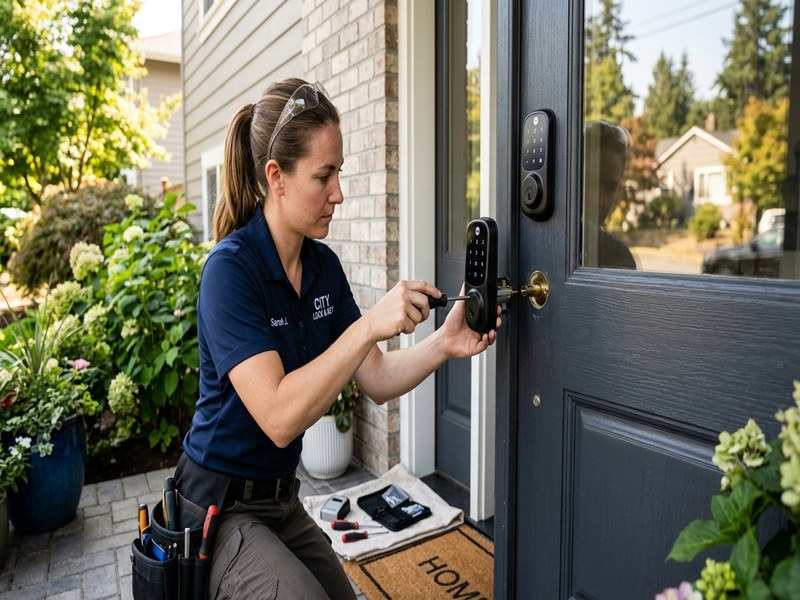
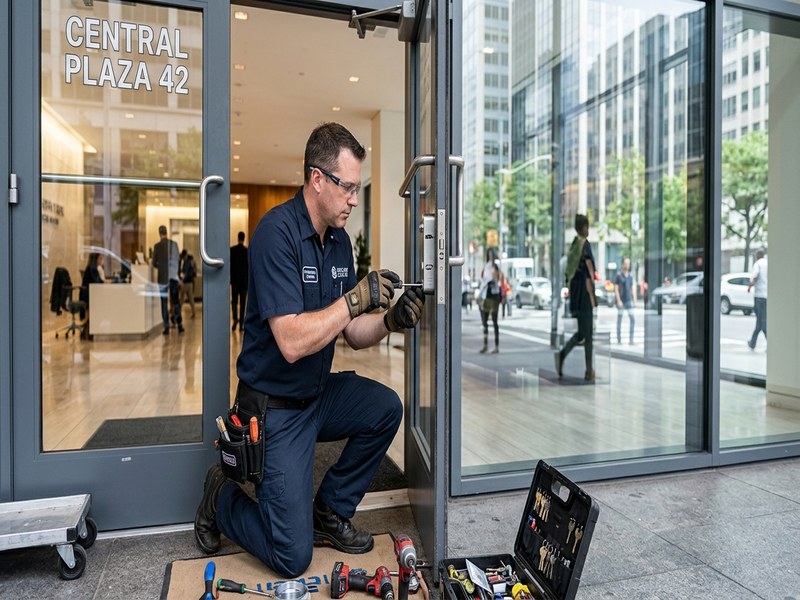
From car lockouts to commercial access control, here is what to expect from a well-equipped mobile locksmith.
Reader accounts of navigating urgent locksmith situations. What worked, what did not, and how long it actually took.
“The BSIS verification tip saved me from hiring an unlicensed company advertising online. The guide made it easy to check credentials before anyone showed up.”
“The cost table was spot-on. Got three quotes and they all landed exactly in the ranges listed. Went with the one who sent a written estimate first.”
“Smart lock comparison was exactly what I needed. Great explanation of the install process and expected costs. Saved me from overpaying at the dealer.”
“Used the hire checklist when my car key fob stopped working. The tech showed BSIS credentials immediately and gave a written quote before starting. Total was right in the guide's range.”
Reader experiences submitted for editorial guidance. Names are illustrative. View all experiences.
Average business-hours response times for the nearest locksmith in major US metro areas, based on service area coverage data.
The questions people search when they need the closest locksmith fast.
Call, do not text. Search "locksmith near me" on Google Maps, filter by "Open now," and call the first result directly. State your address first on the call, then the situation. This sequence gets you dispatched 5-15 minutes faster than texting back and forth. For car lockouts on highways, roadside assistance through your insurance or AAA may be faster in rural areas.
Ask for their state license number immediately. In California, check bsis.dca.ca.gov (under 10 seconds). In other states, a refusal to provide a license number is a disqualifying red flag. While on the call, search the company name on Google Maps to confirm they have a real listing with more than 10 reviews. Total time: under 60 seconds.
Urban areas: 15-35 minutes during business hours. Suburban: 25-50 minutes. Rural: 45-90 minutes. Add 10-20 minutes outside business hours. Any quote under 10 minutes in a suburban area is almost certainly false. Use these benchmarks to evaluate whether a quoted ETA is believable.
No. Google ranks "nearest locksmith" results by a combination of proximity (roughly 25% of the ranking signal), relevance (keyword and category match, roughly 35%), and prominence (reviews, photos, profile completeness, roughly 30%). A company with 200 reviews can rank above a physically closer shop with 8 reviews. Always ask the dispatcher where they are dispatching from to get the actual distance.
Lead with your exact address, then describe the situation (car, house, or office lockout), then the lock or vehicle type. Ask for an ETA, the service call fee range, and the technician's name. This sequence gives dispatchers everything they need immediately and cuts average dispatch time by 3-5 minutes compared to explaining background first.
A quote under $30 for a lockout (bait-and-switch), refusal to provide a license number, no street address on their Google listing, a locksmith who drills instead of picking first, no written or verbal price estimate before work begins, and cash-only payment requirements. These apply even when you are in a hurry, because urgency is exactly when scammers strike.
Not necessarily. Nearest means fastest potential arrival, but quality, pricing, and legitimacy vary widely. A locksmith 2 miles farther with 50 real reviews and a verifiable license is generally a better choice than the closest one with 3 reviews and no license on file. When speed is the priority, a one-minute vet check balances urgency with protection.
Your exact address including apartment or unit number. For car lockouts: year, make, and model of the vehicle, and whether you have any key at all. For house lockouts: the lock type (deadbolt, knob lock, or smart lock). For commercial: whether it is a keyed or electronic entry. Having this ready before calling cuts the call time by 2-3 minutes and gets a tech dispatched faster.
Use our speed guide, check the full FAQ, or browse metro-specific response time data for your area.
Nearest Locksmith is an independent editorial resource. We do not operate a locksmith company, accept payment from locksmiths for placement, or generate leads. Our content is built for consumers navigating a stressful situation.
Our ETA benchmarks are derived from publicly available service area coverage data, licensing database cross-referencing, and consumer reports. We update the guide when market conditions shift.
Our research approach:
Updated: May 2026. Next review: August 2026.